


Main content starts here.
From a Small Workshop in Kawakami Village, Connections Between People and Objects Take Shape—A Family Sharing the Appeal of Nara’s Wood—
Updated: November 24, 2026
At the headwaters of the Yoshino–Kinokawa River lies Kawakami Village in Yoshino District, Nara Prefecture. With forests covering around 80 percent of its area, this producer of high-quality timber is known as the birthplace of Yoshino forestry. In this village of approximately 1,200 people, one place draws a steady stream of visitors from across Japan: Applejack Workshop. Its wooden tableware, skillfully shaped by holding a cutting tool against wood spinning at high speed on a lathe, has earned a devoted following.
In spring 2023, Mio Kobayashi, the eldest daughter of Applejack Workshop woodworker Kiyotaka Kobayashi, established FROM0 Co., Ltd. (pronounced “Furomo”), incorporating the workshop. She became the company’s representative, with her father, mother, and younger brother as employees. We spoke with the Kobayashi family, who continue to bring vitality to their community through woodcraft made with local Yoshino wood, about why they formed a company and what working together as a family has made possible.
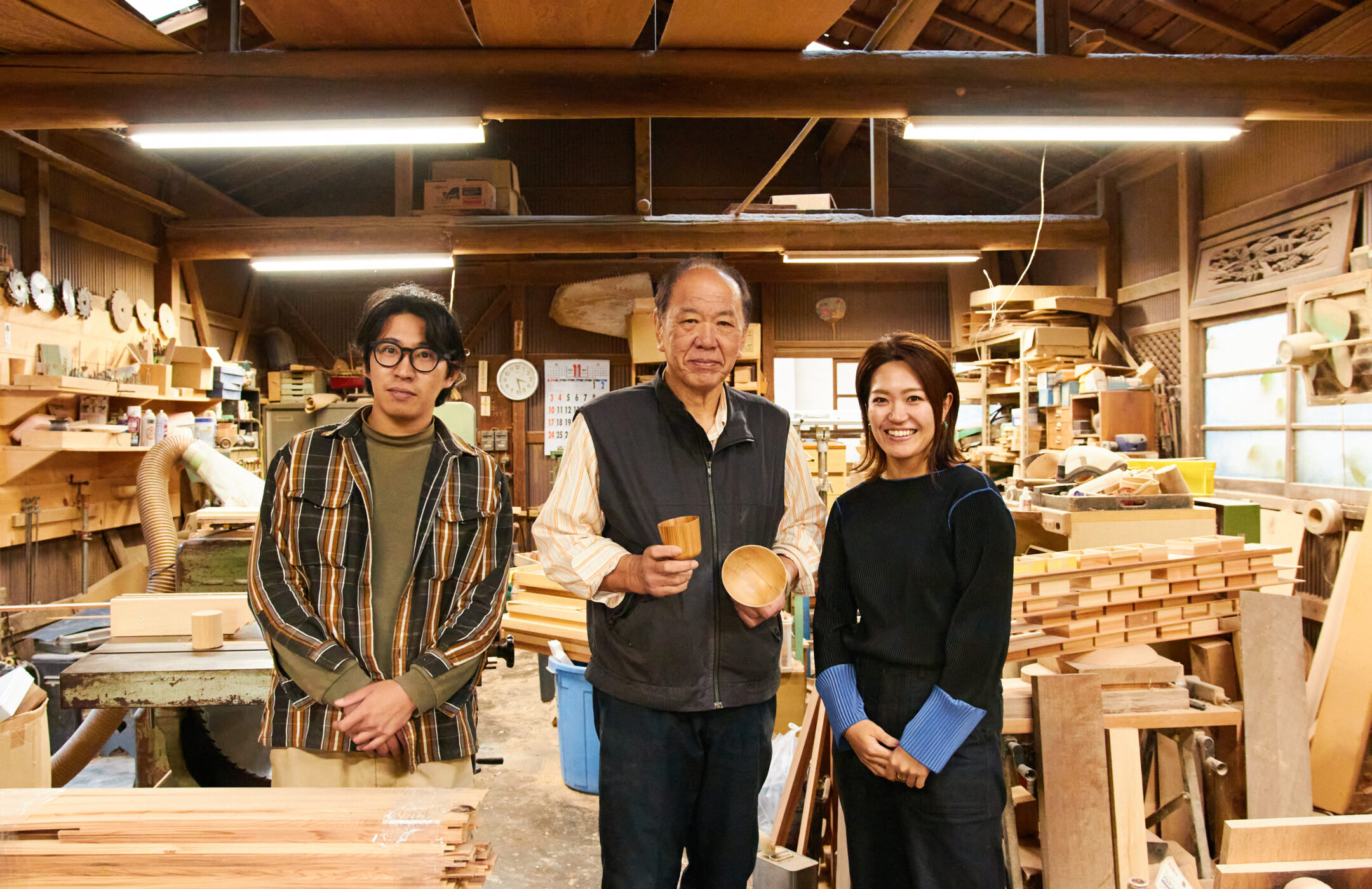
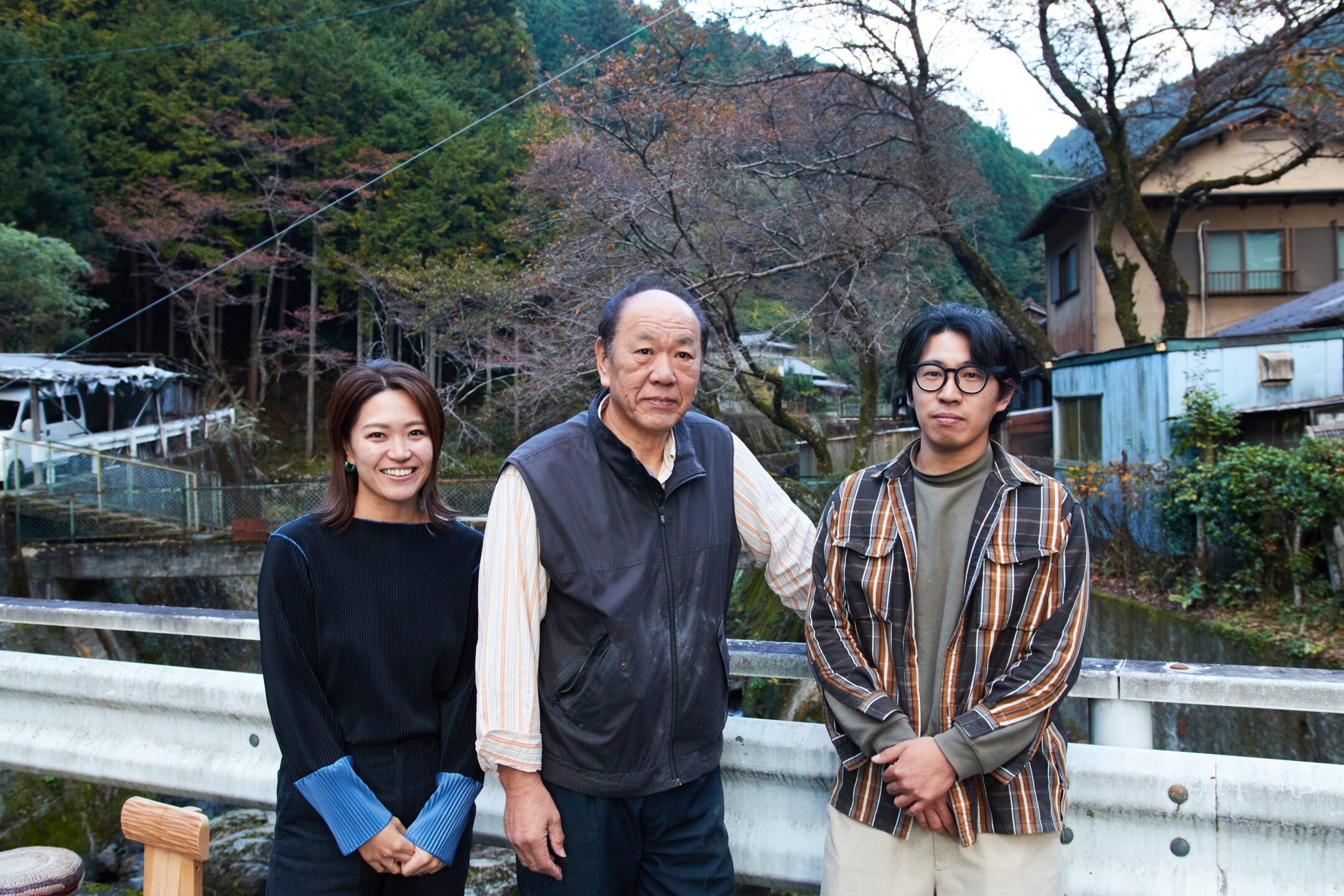
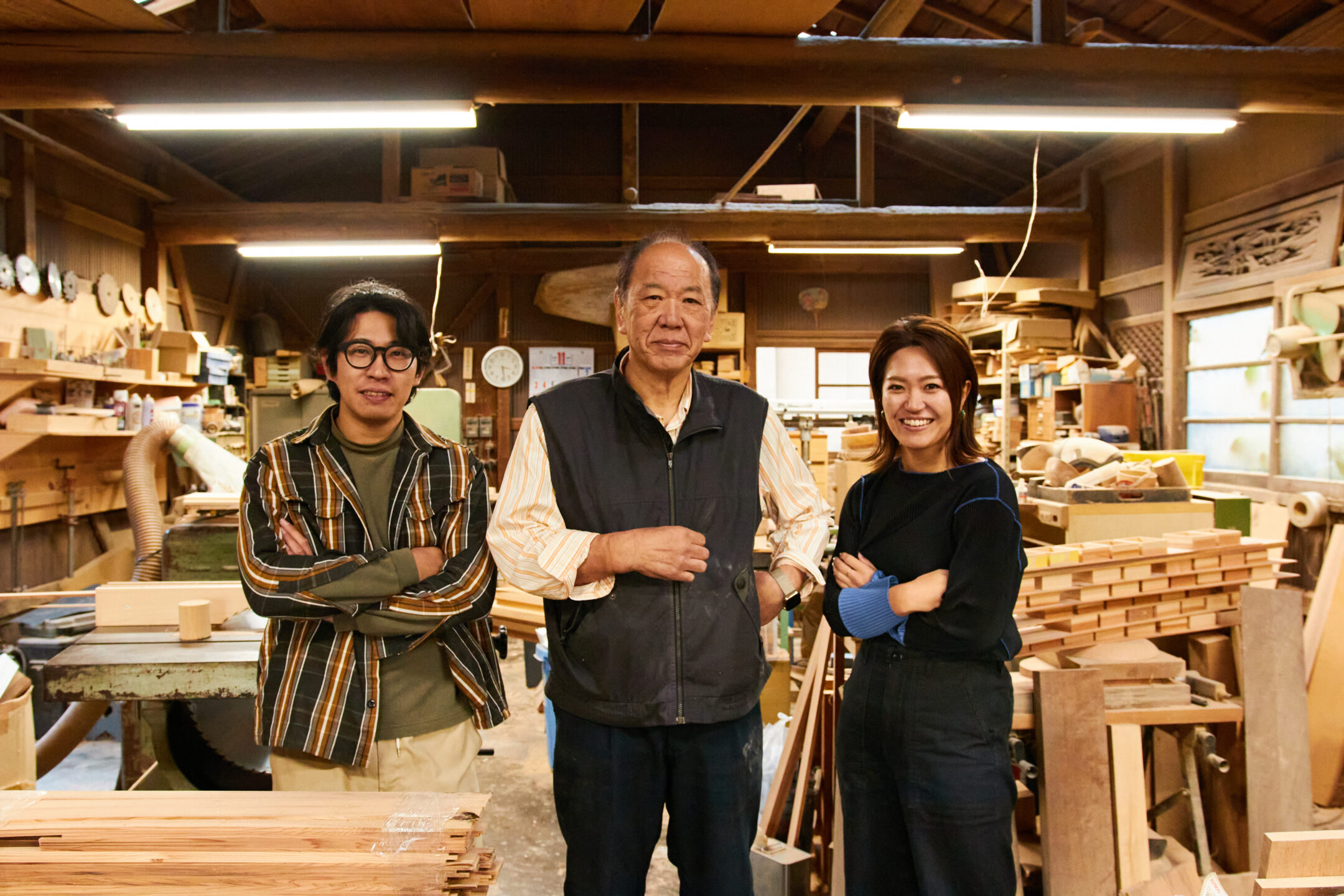 From left: Hyogo Kobayashi (son), Kiyotaka Kobayashi (father), and Mio Kobayashi (daughter)
――Applejack Workshop has so many admirers. Could you take us back to when you first established the workshop and tell us what those early days were like?
Kiyotaka: I originally served in the Japan Air Self-Defense Force. When I was 27, forestry was thriving and the economy was doing well, so I decided to return to Kawakami Village to take over my family’s forestry business. But my plans to move back coincided with the collapse of Japan’s bubble economy. The forestry industry was hit by the downturn, so I gave up on taking over the business. Around that time, the village’s forestry cooperative happened to be setting up a woodworking training facility, now the Kawakami Village Woodworking Center. They were recruiting full-time craftspeople, so I applied and was hired. That was how I got started in woodworking.
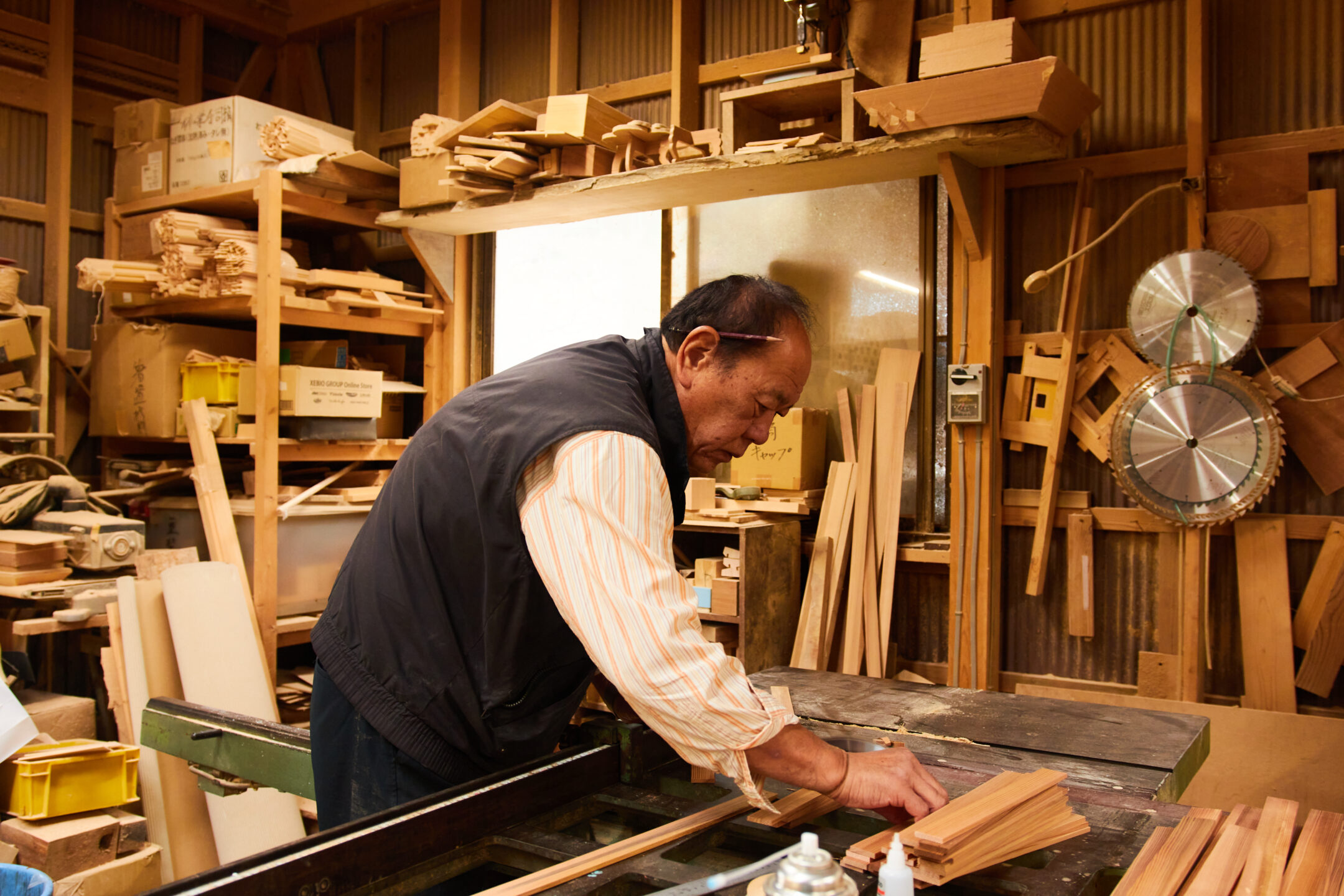
At first, I didn’t know anything about wood, but as I worked at the center, I learned about Yoshino sugi (Japanese cedar) and Yoshino hinoki (Japanese cypress). After working there for 25 years, I went independent and established Applejack Workshop. Although I’d set up my own workshop, I didn’t have anything particular in mind that I wanted to make. I started by making things people asked me for, such as plates, cups, and butter knives. But because I loved aircraft, I was conscious of removing anything unnecessary and making each piece as light as possible. I think that approach has carried through to the pieces we make at Applejack today.
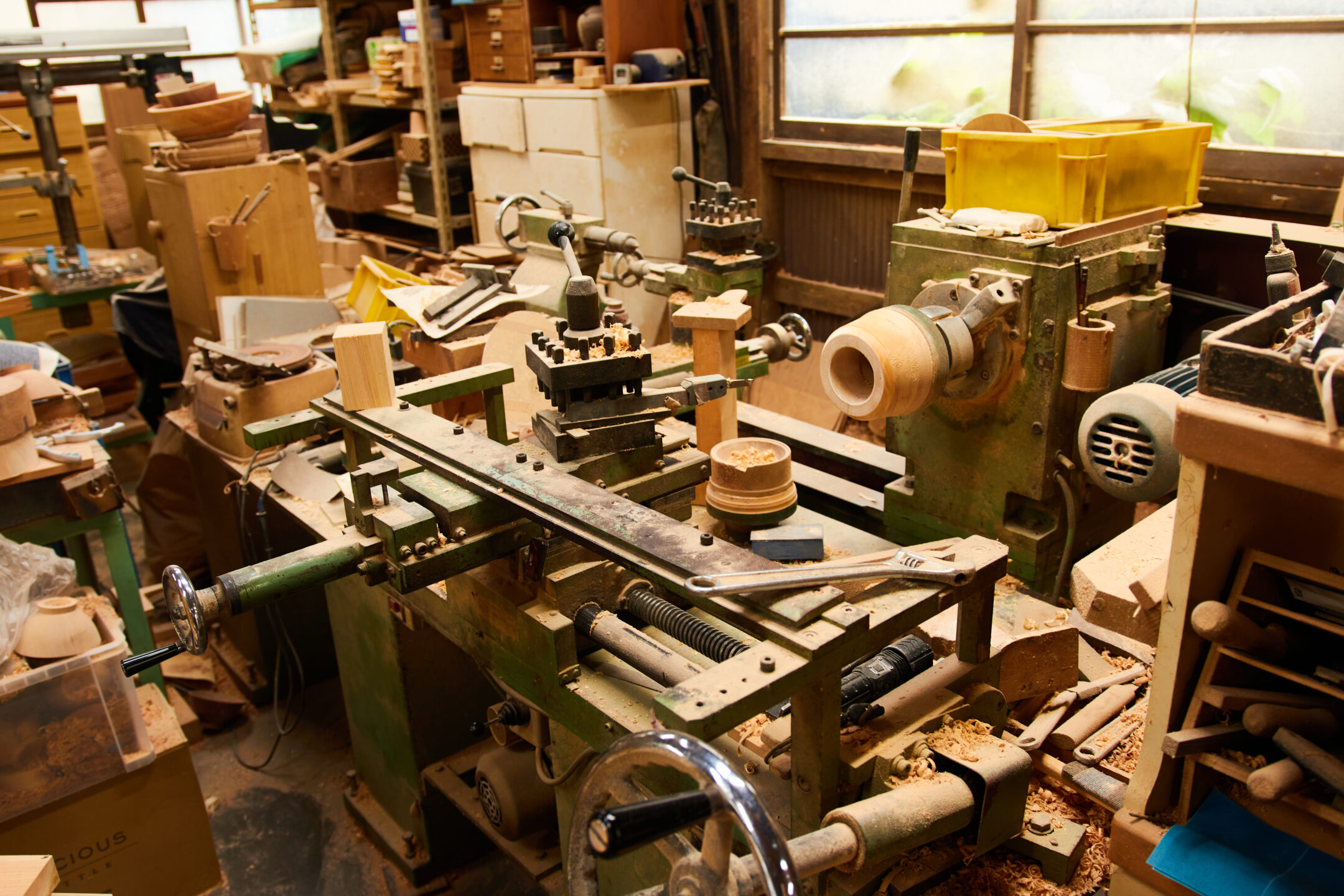
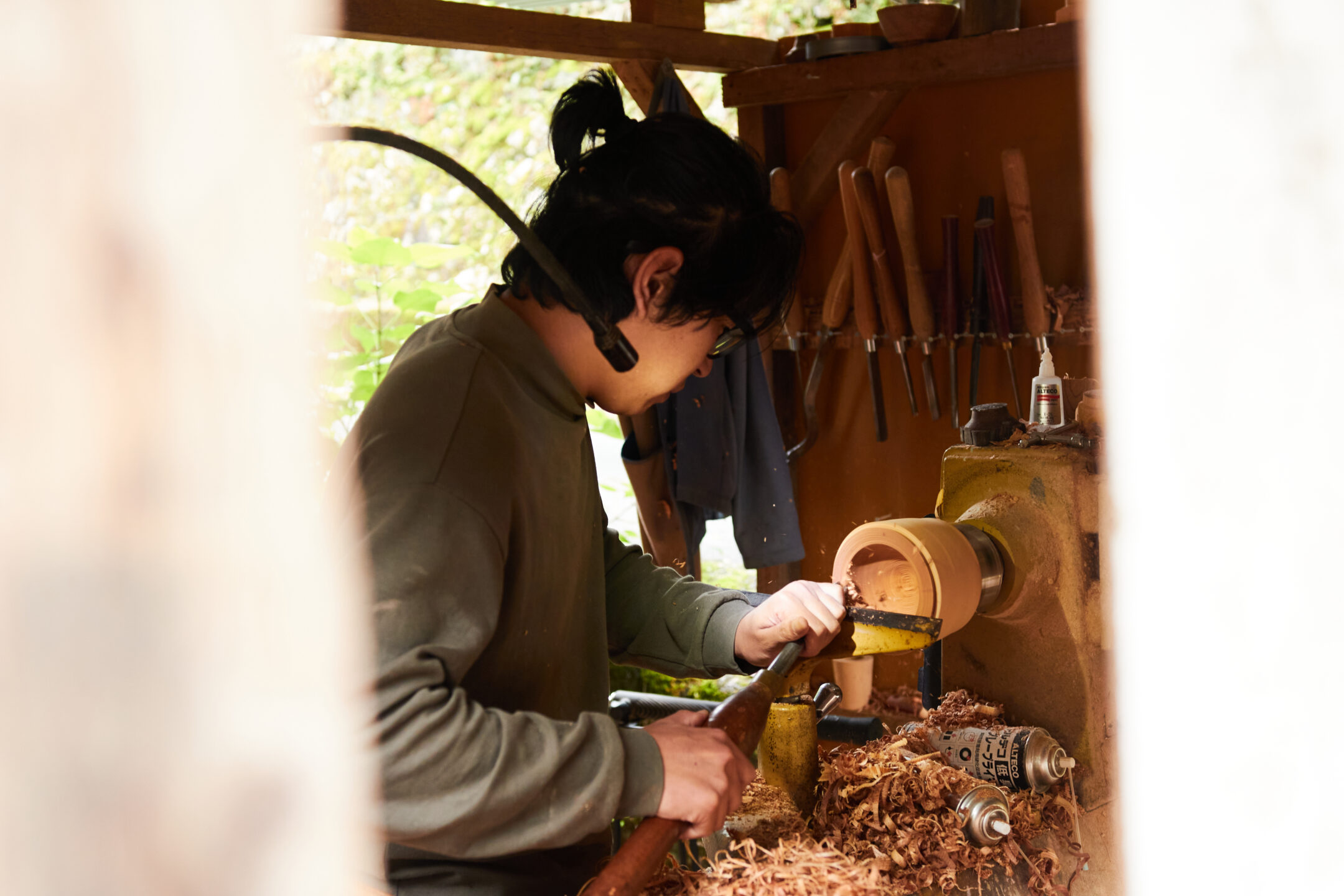
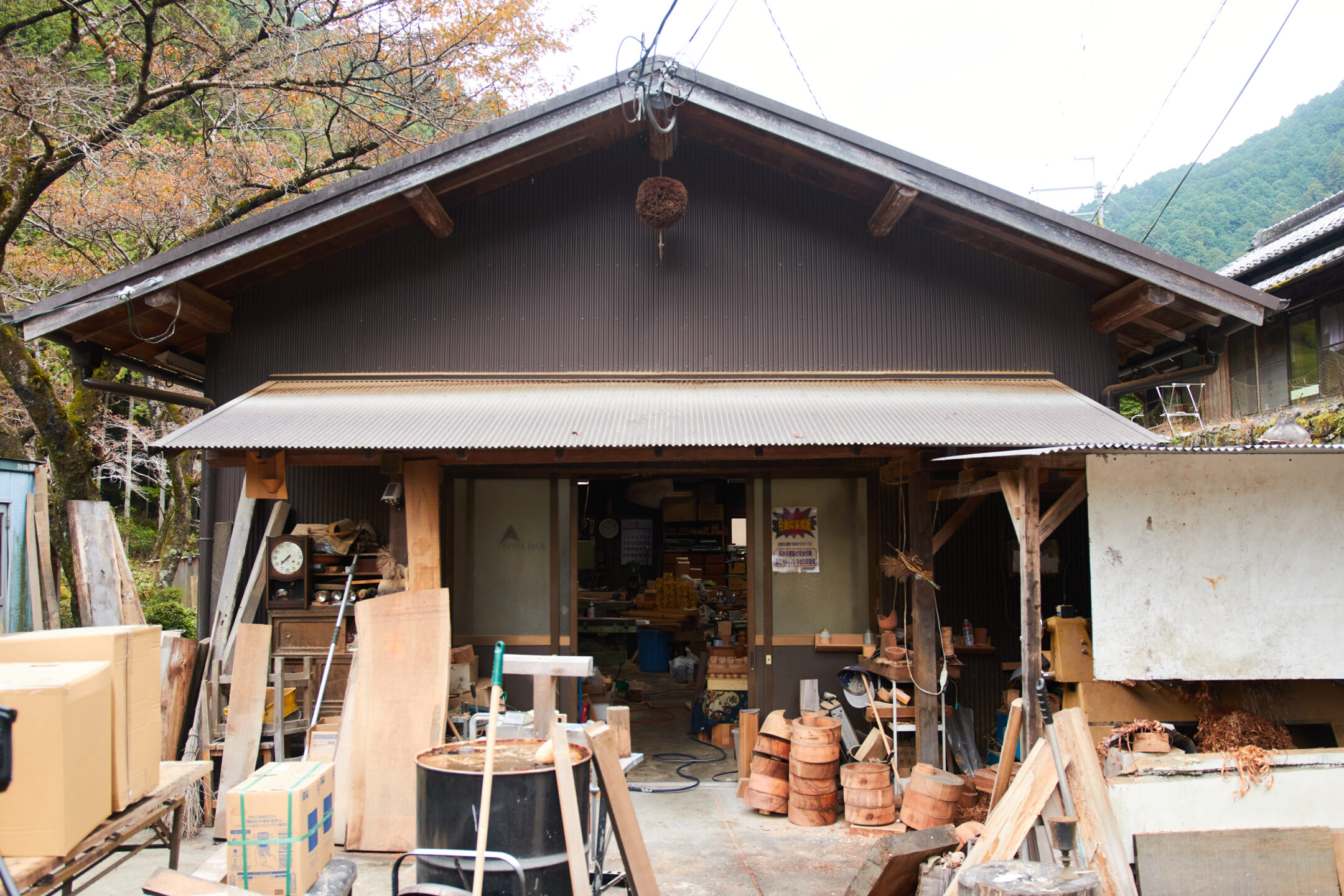 Applejack Workshop in Kawakami Village
Hyogo: The whole family was surprised when my father suddenly said he was leaving the local woodworking center to start his own business. But once he makes up his mind, he doesn’t change it. [Laughs.] As for me, I had left the village after graduating from high school. I studied at a confectionery school in Kyoto, then got a job as a chocolatier at a specialty chocolate shop in Osaka. But I have to admit, I preferred eating chocolate to making it. [Laughs.]
What brought me back to Kawakami Village was a simple question from my father: “Would you like to help out at the workshop?” When I was working as a chocolatier, I’d go to Tokyo on business, but after two or three days, I’d had enough and wanted to go home. At those times, the place that came to mind wasn’t Osaka, where I was living, but Kawakami Village, where my family home was. I would picture the village’s mountains and rivers. So I decided to move back. That said, I didn’t start out thinking, “I’m going to become a woodworker!” I worked with my father for three years, then spent two years training at a workshop in Higashiyoshino Village.
During my training, I mainly made furniture, such as chairs. My boss would take me to other workshops and introduce me to woodcraft artists he knew. Little by little, I became interested in what other people were making, and I started to enjoy making things myself. Then I started to enjoy making wooden chairs and other furniture too. After that, I returned to Kawakami Village, started my own business, and established “Lumberjack”. And now, here I am working as an employee at FROM0. [Laughs]
――Mio, could you tell us what led you to establish FROM0?
Mio: I left home at 18 to become a police officer. Whenever I came back to Kawakami Village on my days off, I was always surprised by how many customers traveled such long distances to visit my father’s workshop. And something else struck me: for some reason, everyone seemed to leave the village feeling refreshed. Growing up here, I’d always taken Kawakami for granted. For the first time, I realized just how much this place could offer people.
It was also only after leaving Kawakami that I came to appreciate my father’s craftsmanship. There are things about his pieces that you only appreciate once you use them. Listening to customers talk about his work and about him, I began to understand just how much people loved Applejack.
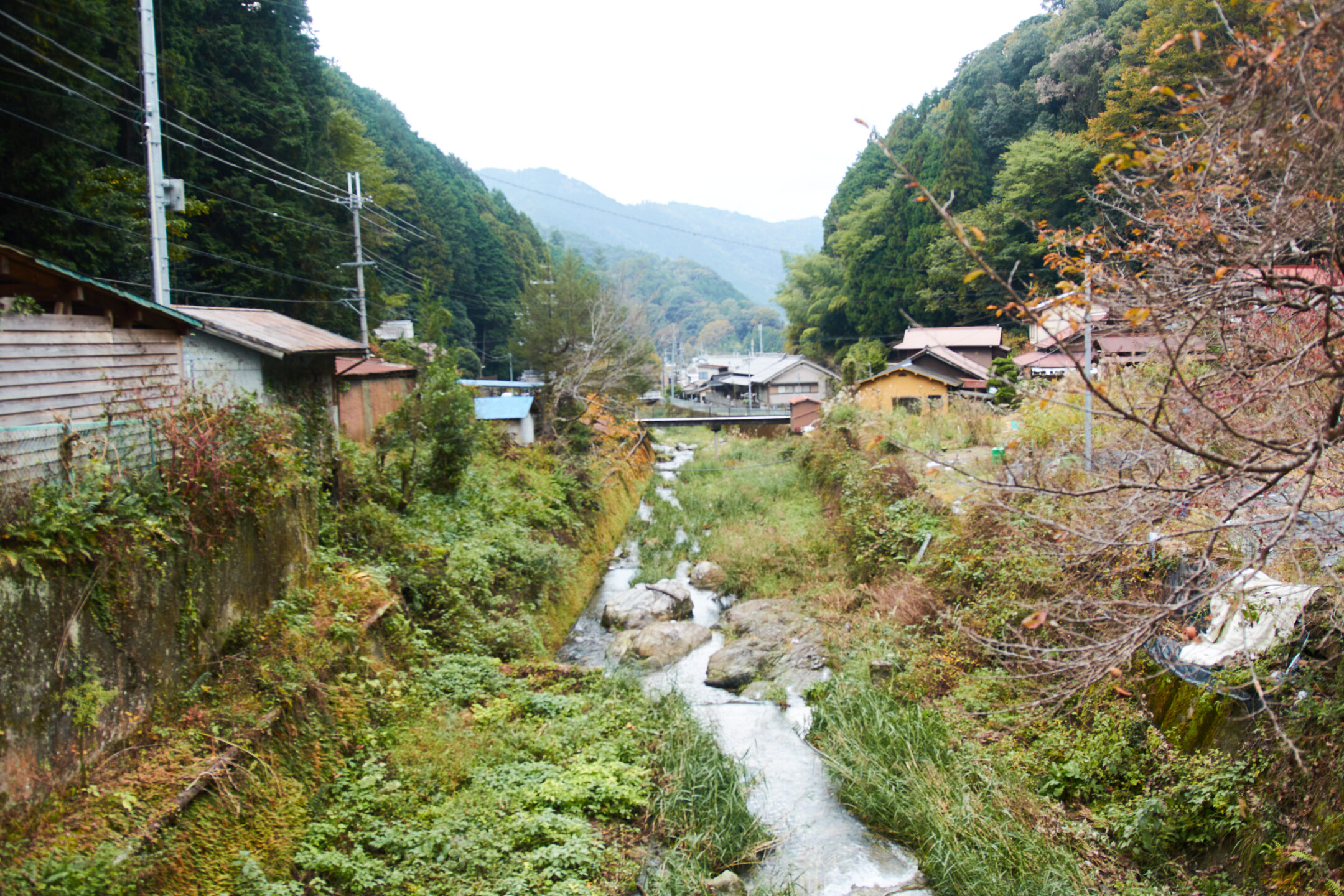 Lush natural scenery surrounds the workshop
Mio: Not a day went by without my father’s mobile phone ringing, and I’d begun to sense that he was struggling to run Applejack Workshop on his own. At the same time, although he’s usually fairly relaxed about details, I knew how much he valued his relationships with customers. Sometimes he would even include a handwritten letter when sending out a piece. I thought that if I took care of everything apart from the woodworking, he could concentrate on making things and the workshop would run more smoothly. I also wanted more people to discover my father’s and brother’s work and my hometown of Kawakami Village. The more I thought about it, the more I wanted to move back and help at the workshop. So, in autumn 2022, we held a family meeting. I suggested forming one company as a family and creating an environment where my father and brother could focus on their craft. My parents agreed, and my brother did, too.
At the end of March 2023, I left the police force after many years of service and established FROM0 in April. The founding date, April 3, was actually my mother’s birthday, so I worked hard to get everything ready in time for that day. [Laughs.]
Hyogo: I was actually working under my own brand, Lumberjack, at the time. But my sister said, “Why not give it a try, even if it’s just for a year?” So I decided to join FROM0. I thought, “I’ll give it a year.” And before I knew it, that year was already over! [Laughs.] My sister’s been thinking things through for us, so I’m still here working with the company.
――Could you tell us more about the ideas behind founding FROM0?
Mio: My father and brother are both craftspeople, each with his own ideas about the work he creates. Bringing everything together as a company meant closing the individual businesses they’d been running, so I did worry that I might be taking away their freedom. With that in mind, and building on what Applejack had always valued, I chose three guiding principles for FROM0: making things that connect people, a sense of gratitude, and creating an environment where craftspeople can work comfortably.
Our company name, FROM0 (pronounced “Furomo”), uses the number zero as its final character rather than the letter O, to convey the meaning “from zero.” It brings together two ideas: that we are starting from zero, and that craftspeople and artists can create something from nothing—turning zero into one. I can’t turn zero into one the way my father and brother can, but I hope I can take the one they create and turn it into two or even three.
――Kiyotaka, could you tell us about the distinctive features of your work?
Kiyotaka: I often use thoroughly dried cedar and cypress. I always try to make pieces that are light and durable. Since they’re used every day, I like soft, rounded shapes that gently cradle their contents. And because people hold them in their hands, I feel they need to be carefully finished, without any sharp edges. It’s easier to achieve that with wood from older trees, and it’s the quality of Yoshino wood that makes such beautiful tableware possible.
Mio: Actually, all the tableware in our home is wooden tableware from Applejack. One great thing about wooden tableware is how light it is. My father made the dishes for my son’s okuizome, a traditional Japanese ceremony where you pretend to feed a baby to wish for their healthy growth. So he’s been used to wooden tableware since he was little, and he doesn’t like ceramic bowls because they’re too heavy. It also doesn’t clatter during meals or shatter if you drop it. And the warm color and pleasant feel somehow put you in a gentler frame of mind when you use it.
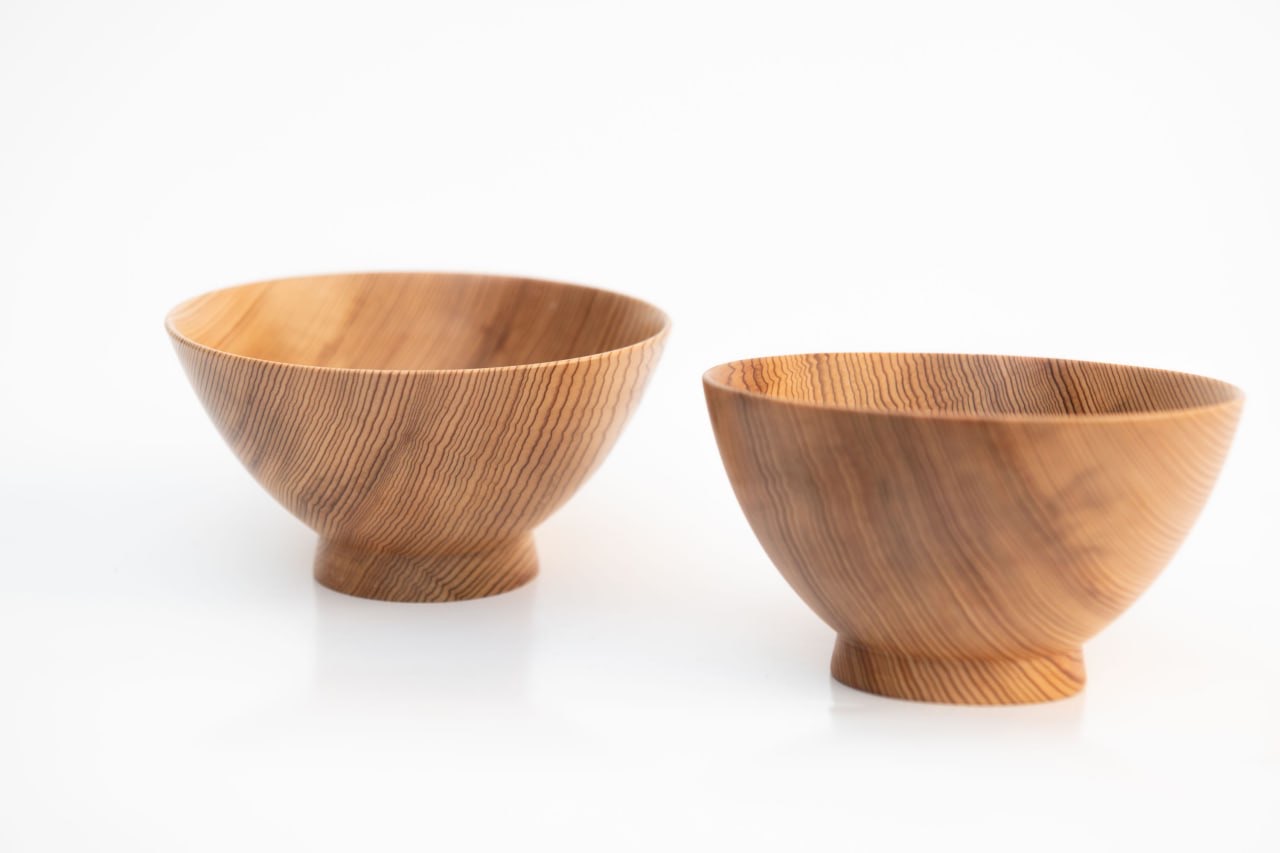 Kiyotaka’s work
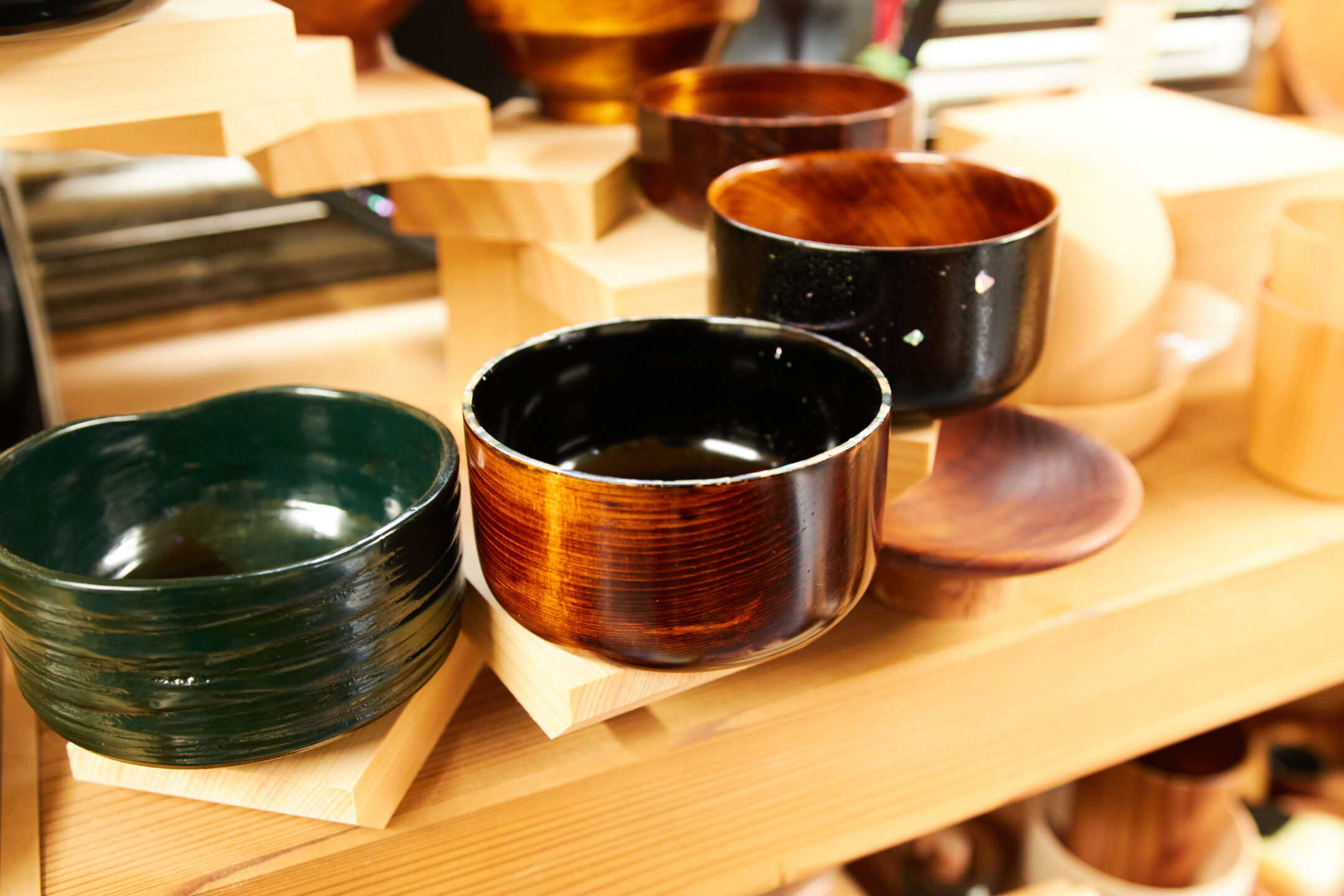 Kiyotaka’s work
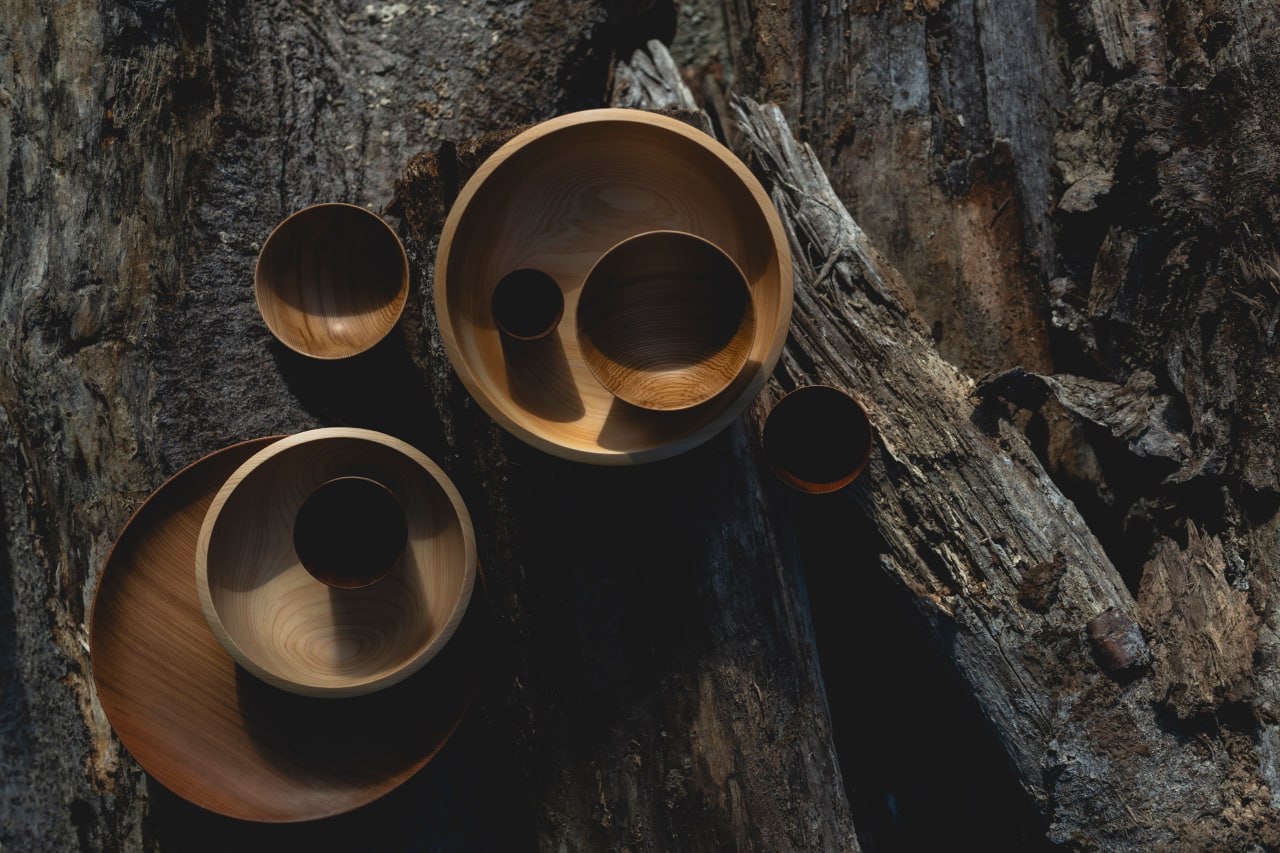 Kiyotaka’s work
――Hyogo, could you tell us about the distinctive features of your work?
Hyogo: Rather than starting with something I want to make, I look at the wood and think about what kind of piece to make from it. Every piece of wood has its own character, so I try to understand that before I start making something. Another feature of my work is that, instead of cutting down trees specifically for it, I use wood that would otherwise be discarded, used as firewood, or given little value. I also sometimes use green wood, which is wood that hasn’t been dried. As it dries, it bends and takes on a distinctive shape. Whatever wood I’m working with, I hope to make pieces that show people just how interesting wood can be.
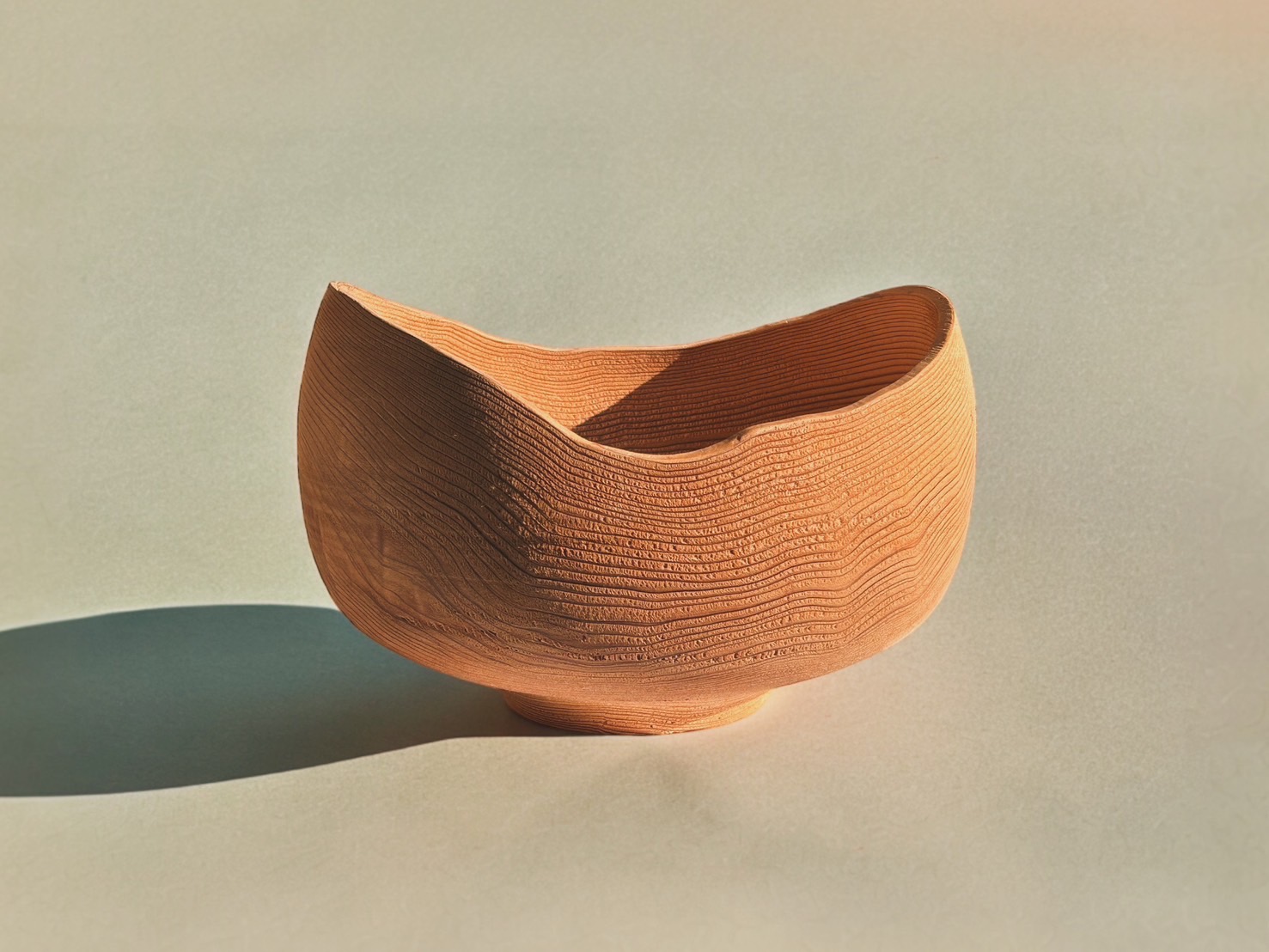 Hyogo’s work
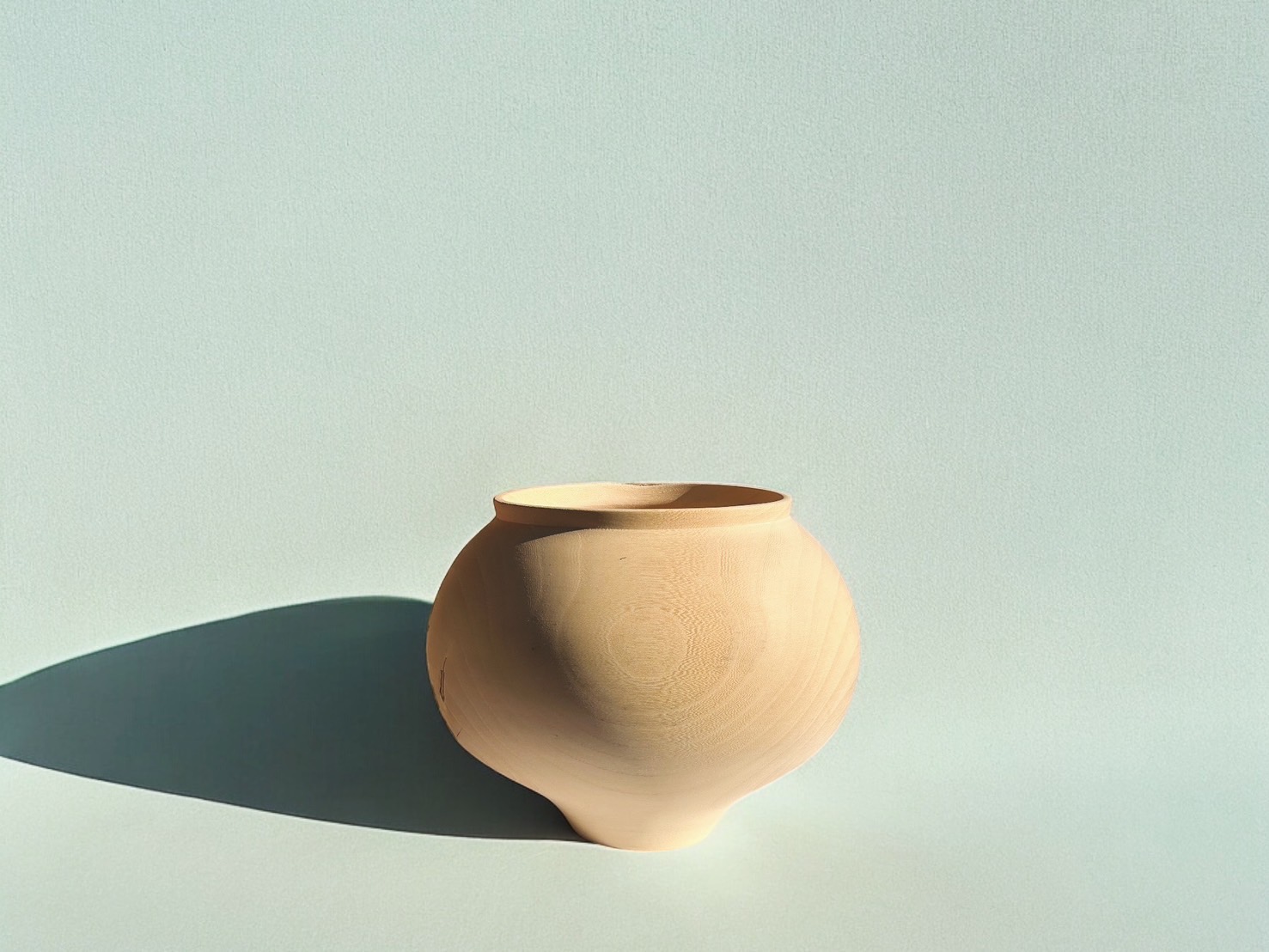 Hyogo’s work
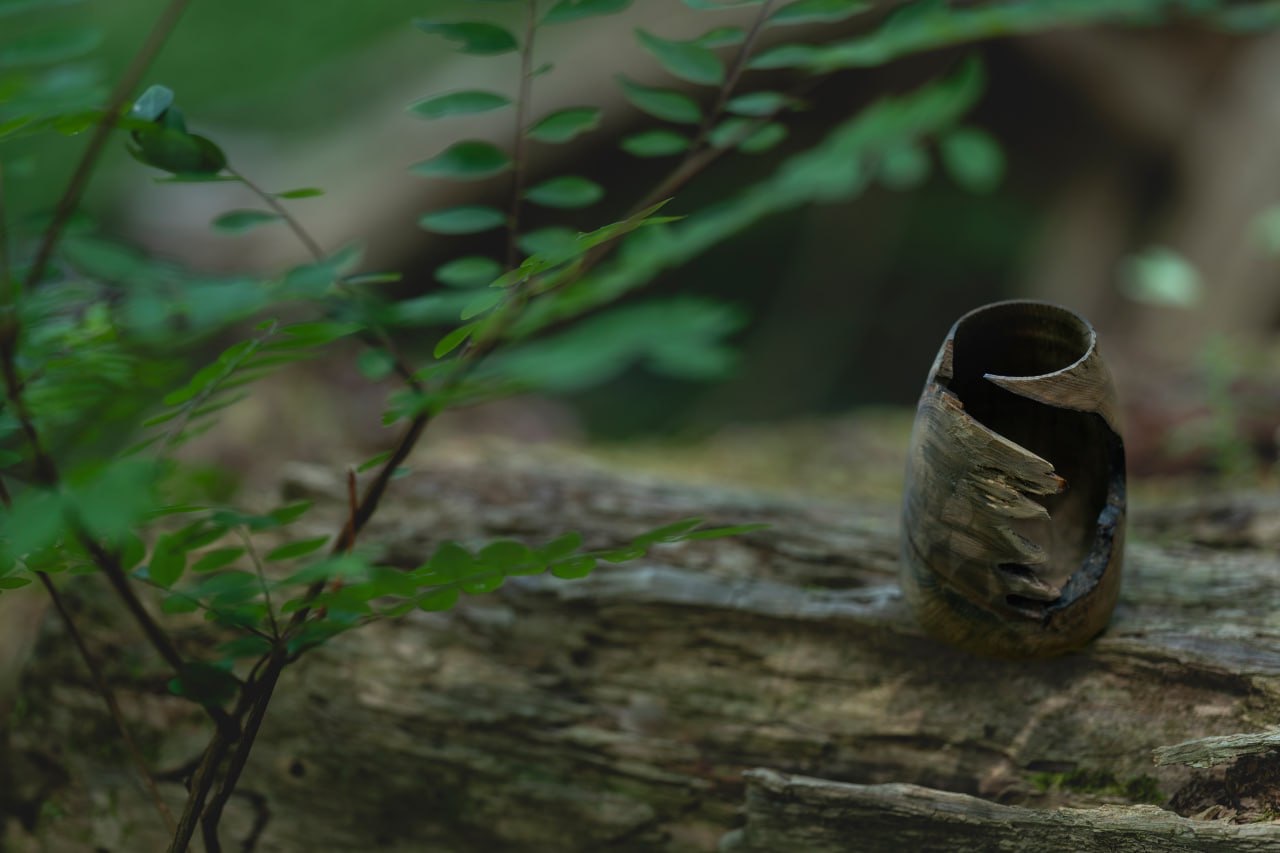 Hyogo’s work
Mio: Alongside Yoshino wood, my brother often uses other types of wood in his work, such as cherry from Nara. At FROM0, we’d like more people to experience his distinctive pieces and appreciate the qualities of wood.
――Could you share your vision for the future of FROM0?
Mio: FROM0 also runs Mitsuha, which offers kakinoha-zushi—sushi wrapped in persimmon leaves, known as a local specialty of the Yoshino region of Nara. At our family meeting exactly two years ago, my mother told us about her dream of opening a kakinoha-zushi shop, and we made that dream a reality. We mainly make it to order and take reservations through Instagram direct messages. Sometimes we even pack the sushi in wooden boxes made by my father. It really is a collaboration between my parents! There are actually three of us siblings. My other younger brother is a chef and the older of my two brothers. He also moved back to Kawakami Village this year and joined FROM0. He’s now working hard as a private chef, going out to cook for clients.
In the future, in addition to my father and my youngest brother Hyogo’s Applejack and my mother’s Mitsuha, I’d like to develop a business that suits my other brother’s individuality. As our next step, we plan to open a gallery near the workshop around next spring. I hope we can make it a place where visitors can not only pick up and look at my father’s and my brother Hyogo’s pieces, but also take their time enjoying my mother’s kakinoha-zushi and sweets made by Hyogo, who used to be a chocolatier, along with some tea.
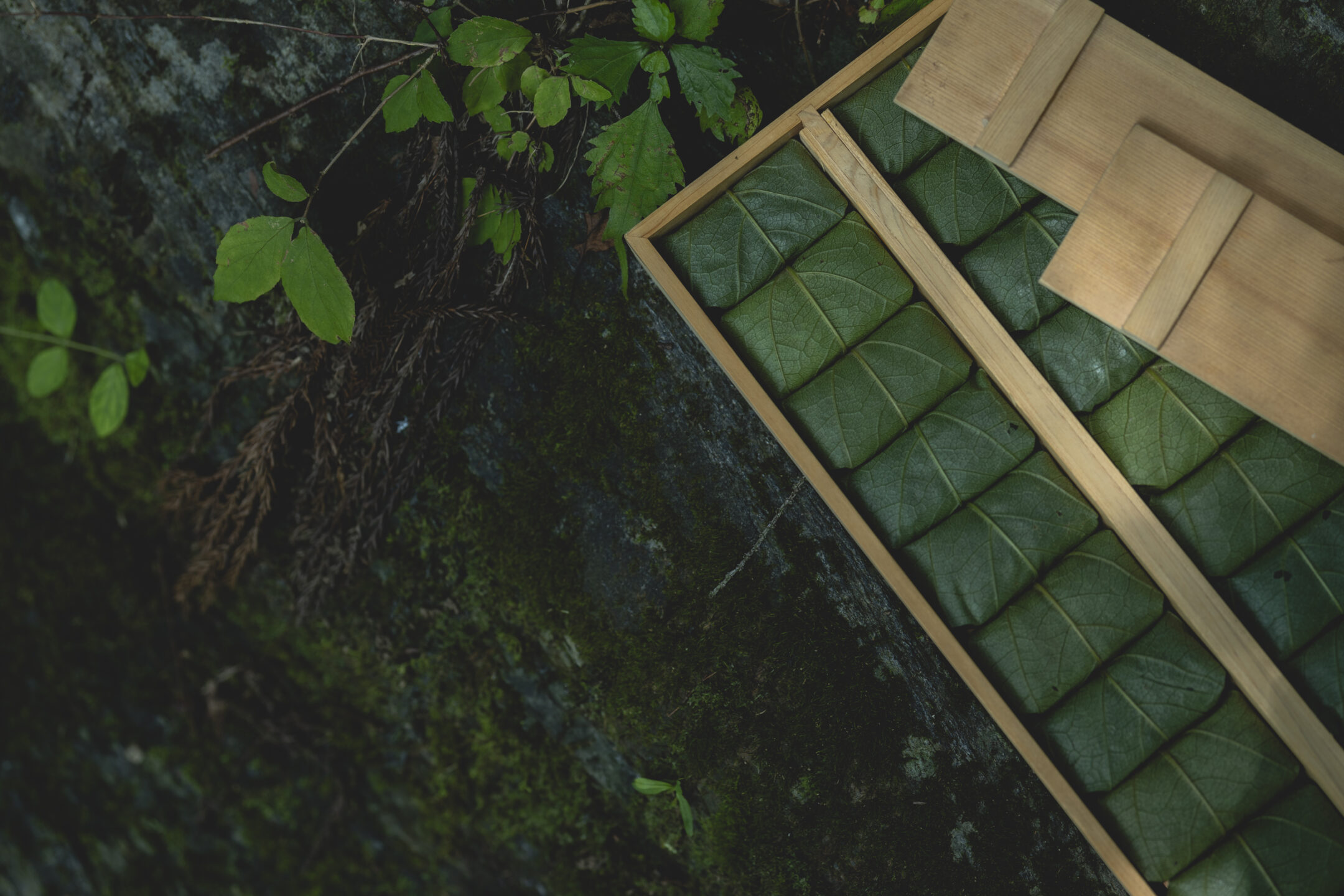 Mitsuha kakinoha-zushi
――Finally, could each of you tell us what you find appealing about Nara’s wood?
Kiyotaka: First of all, Yoshino cedar and Yoshino cypress have few knots and beautiful color. The darker, denser part of each growth ring is called latewood. These bands are narrow, giving the wood a delicate appearance. And above all, they smell wonderful. Cedar and cypress from other regions sometimes have no noticeable scent.
Hyogo: As a woodworker, I find it very easy to work with. It’s easy to shape and handle. And I feel grateful, or perhaps proud, to be using timber from the Yoshino region, with its long history. Recently, I had the opportunity to make pieces from a cedar tree that had fallen in the grounds of Tamaki Shrine in Totsukawa Village, which was a real honor.
Mio: I have great respect for all the craftspeople who work with Nara’s wood. So much time and effort goes into it from the moment a tree is planted. I’m grateful to the people who have cared for those trees. Yoshino forestry dates back to around the sixteenth century, toward the end of the Muromachi period. They say it takes a hundred years for a tree to be ready for harvest, so the person who plants a sapling won’t live to see it fully grown and cut down. Passing on the same work from one person to the next, across generations, is something remarkable. That’s the kind of history Kawakami Village has.
Our motto at FROM0, “The ordinary becomes special,” actually came from one of Applejack’s fans. It expresses the idea that being able to buy things made from high-quality Yoshino wood is something special for people who visit our workshop here in Kawakami Village, even though it seems ordinary to us. I’d be happy if the pieces by my father and brother that people discover at the workshop fitted into their daily lives and, before they knew it, became a familiar part of their everyday routines. Here in Kawakami, there’s a landscape and an atmosphere that have remained unchanged, though they’re hard to put into words. Through FROM0, I’d like to share that appeal of Kawakami Village, too. I hope everyone will come and visit the workshop and leave feeling refreshed
Closing Thoughts
The Kobayashi family continue to create together, supporting one another and drawing on their individual strengths. Mio, who brings the family’s different perspectives together, says, “Everything we do is rooted in having been born and raised in Kawakami Village. I want to cherish what has remained unchanged here and find different ways to share what only this village can offer.”
Founded by Kiyotaka, who has always valued the connections between people, Applejack Workshop has taken on a new form as FROM0, bringing the whole family together. From their small workshop in Kawakami Village, they will surely continue to share the appeal of Nara’s wood with many more people.
INFORMATION
FROM0 Co., Ltd.
Address
1595 Unogawa, Kawakami Village, Yoshino District, Nara Prefecture, Japan
FROM0 Instagram
https://www.instagram.com/applejack.from0/
Mitsuha kakinoha-zushi Instagram
https://www.instagram.com/hahano.osushi_mitsuha/
Text:Yoshiko Doi
Photography:Itaru Sawada
YOSHINOWOOD new > EN Articles > From a Small Workshop in Kawakami Village, Connections Between People and Objects Take Shape—A Family Sharing the Appeal of Nara’s Wood—


Copyright © Nara Prefecture All rights reserved.
Unauthorized reproduction of the articles and photos on each page is prohibited.